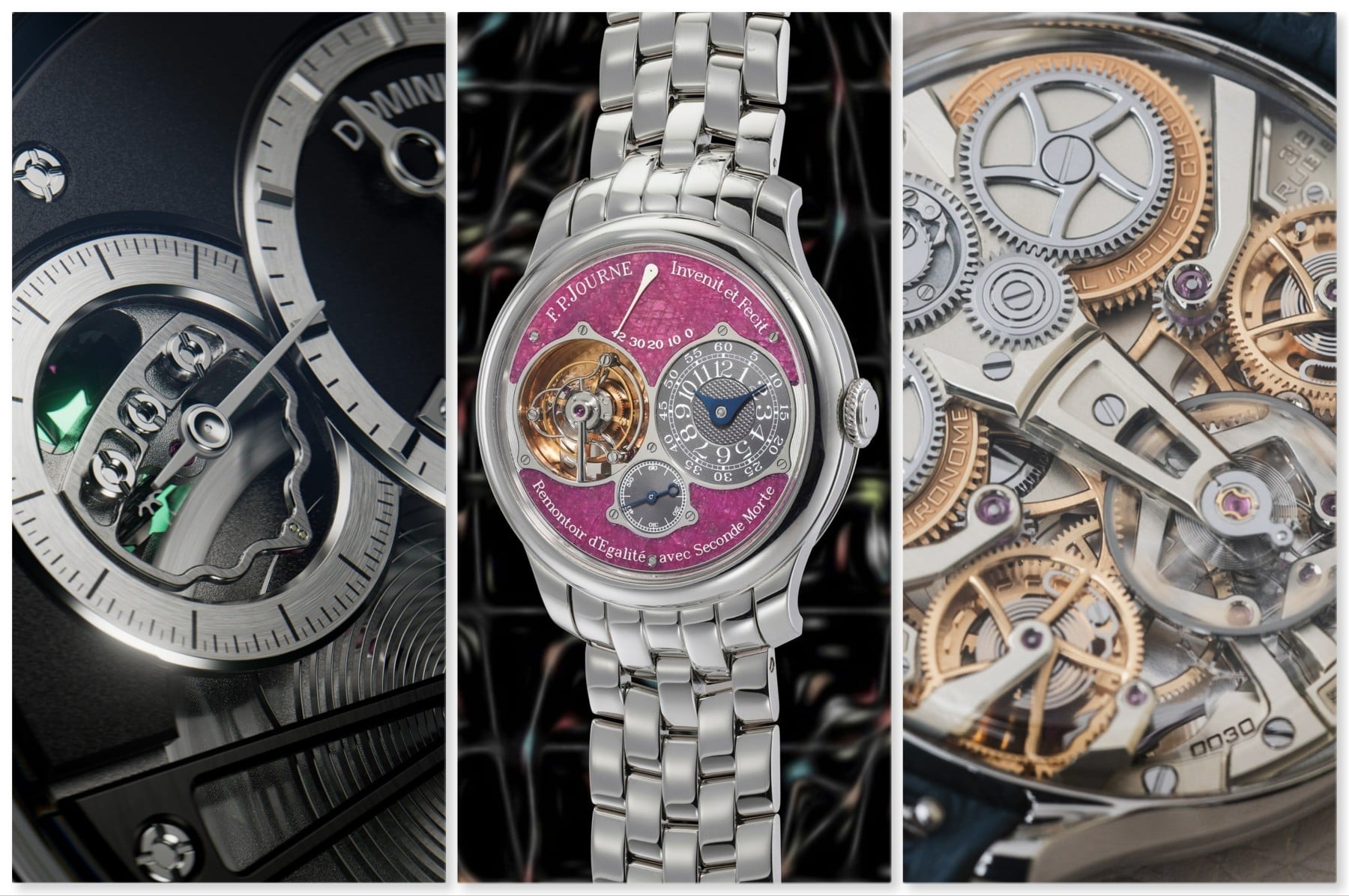
When Are Watches Art?
This article delves into the philosophical question of what elevates a watch from a mere mechanical object to a work of art. It explores factors such as craftsmanship, rarity, intention, and collector perception, drawing parallels with the art world and recent high-profile watch auctions where timepieces have commanded prices comparable to fine art.
- Phillips auction achieved a record US$75.8 million in watch sales.
- 16 timepieces sold for over US$1 million each.
- The F.P. Journe Chronomètre à Résonance “Souscription, No. 007” sold for US$13.92 million.
- Paul Newman's Rolex Cosmograph Daytona ref. 6239 sold for US$17,752,500.
- The Haldimann H9 – Reduction is cited as an example of a watch that can be considered art.
Watch auctions are increasingly resembling art-world sessions with an electrifying atmosphere and feverish anticipation.
Exceptional timepieces are viewed by high-rolling collectors as tangible assets, sitting alongside fine art and classic cars.
The value of watches, like art, is a subjective blend of emotional appeal, cultural significance, market economics, watchmaker reputation, historical context, craftsmanship, and previous auction sales.
Watchmaking is often referred to as the Twelfth Art, situated at the intersection of engineering and artistry.
A watch is considered art if it is personal, reflecting the vision, perspective, and intent of the individual watchmaker.
The Haldimann H9 – Reduction, with its hidden time display behind an opaque crystal, shifts focus from timekeeping to reflection, transforming it into a thought-provoking object.